Kategoriler
Eser Adı Yazar Yayınevi Açıklama İçindekiler Barkod
Arama  
Ana Sayfa Sipariş Takip Üyelik Yardım İletişim
 
 
Bülten
   

×
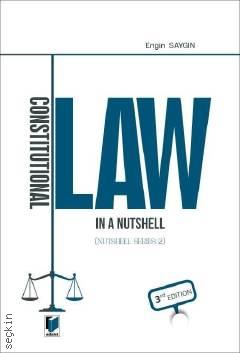
Constitutional Law in a Nutshell
Ekim 2025 / 3. Baskı / 432 Syf.
Fiyatı: 800.00 TL
Temin süresi 2-3 gündür.
 
Sepete Ekle

Diğer Baskılar
 Baskı Tarih Fiyatı İndirimli
 2. Eylül 2022 470.00 TL -      Sepete Ekle
 1. Eylül 2020 94.00 TL -      Sepete Ekle
   

In the ever-changing landscape of legal education and practice, it is with great enthusiasm that I am able to present the third edition of Constitutional Law in a Nutshell. I must note that the third edition of "Constitutional Law in a Nutshell" still aims to be a concise yet comprehensive guide to the principles and concepts of constitutional law. At the same time, the third edition still balances clarity with depth, making it suitable for both novices and those seeking to enhance their legal knowledge.

Barkod: 9786253774721
Yayın Tarihi: Ekim 2025
Baskı Sayısı:  3
Ebat: 16x24
Sayfa Sayısı: 432
Yayınevi: Adalet Yayınevi
Kapak Türü: Karton Kapaklı
Dili: Türkçe
Ekler: -


İÇİNDEKİLER
TABLE OF CONTENTS
TABLE OF CONTENTS  5
LIST OF TABLES  15
PREFACE TO THE THIRD EDITION  17
PREFACE TO THE SECOND EDITION  18
ABOUT THE AUTHOR  19
ABOUT THE BOOK & ACKNOWLEDGEMENT  21
HOW TO USE THIS BOOK  25
CHAPTER 1: CONSTITUTION AND CONSTITUTIONALISM
INTRODUCTION  31
1. MEANING OF CONSTITUTION  32
1.1. Definition of Constitution  32
1.2. Content of Constitutions  33
1.2.1. Preliminary Chapter (or Preamble)  33
1.2.2. General Principles Chapter  36
1.2.3. Institutions of the State Chapter  38
1.2.4. Fundamental Rights and Freedoms Chapter  43
1.2.5. Amendment Procedure Chapter  47
1.3. Functions of Constitutions  59
1.4. Essentials of Good Constitutions  60
2. CLASSIFICATION OF CONSTITUTIONS  61
2.1. Written and Unwritten Constitutions  63
2.1.1. Merits and Demerits of Written Constitutions  64
2.1.2. Merits and Demerits of Unwritten Constitutions  65
2.2. Soft and Rigid Constitutions  66
2.2.1. Merits and Demerits of Soft Constitutions  68
2.2.2. Merits and Demerits of Rigid Constitutions  69
2.3. Frame and Regular Constitutions  70
3. CONSTITUTIONALISM  70
3.1. History of Constitutionalism  71
3.2. Constitutional History of Türkiye  75
SELF–TEST QUESTIONS  78
IN–TEXT QUESTIONS  79
SELECTED BIBLIOGRAPHY/FURTHER READING  79
CHAPTER 2: CONSTITUENT AND CONSTITUTED POWER
INTRODUCTION  83
1. CONSTITUENT POWER  84
1.1. The term of Constituent  84
1.1.1. Sieyès  85
1.1.2. Schmitt  87
2. CONSTITUTED (AMENDING) POWER  88
2.1. The term of Constituted  88
2.1.1. Sieyès  89
2.1.2. Friedrich  89
3. CONSTITUTIONAL AMENDMENT PROCEDURES  90
3.1. Initiative  90
3.2. Parliamentary Procedures  92
3.3. Referendums  93
SELF–TEST QUESTIONS  97
IN–TEXT QUESTIONS  98
SELECTED BIBLIOGRAPHY/FURTHER READING  98
CHAPTER 3: INTERPRETATION OF CONSTITUTIONS
INTRODUCTION  103
1. METHODS OF INTERPRETATION  104
1.1. Textualism  105
1.2. Original Intent and Meaning  106
1.3. Judicial Precedent  108
1.4. Pragmatism  109
1.5. Moral Reasoning  110
1.6. Structuralism  110
2. METHODS OF REASONING  114
2.1. Syllogism  114
2.2. Argumentum a Contrario  115
2.3. Analogy  115
SELF–TEST QUESTIONS  118
IN–TEXT QUESTIONS  119
SELECTED BIBLIOGRAPHY/FURTHER READING  119
CHAPTER 4: CONSTITUTIONAL REVIEW
INTRODUCTION  123
1. AMERICAN MODEL  126
2. EUROPEAN MODEL  128
3. WAYS OF REVIEW  132
3.1. Abstract Review of Law  133
3.2. Concrete Review of Law  134
3.3. A Priori Review  135
3.4. A Posteriori Review  135
3.5. Constitutional Complaint  135
4. CONSTITUTIONAL REVIEW IN FRANCE, GERMANY AND THE UK  138
4.1. France  139
4.2. Germany  139
4.3. United Kingdom  141
SELF–TEST QUESTIONS  142
IN–TEXT QUESTIONS  143
SELECTED BIBLIOGRAPHY/FURTHER READING  143
CHAPTER 5: THE STATE
INTRODUCTION  147
1. THE ELEMENTS OF THE STATE  148
1.1. Territory  150
1.2. Population  157
1.3. Sovereignty  157
1.3.1. Internal & External Sovereignty  159
1.3.2. Real & Nominal Sovereignty  160
1.3.3. Legal & Political & Popular Sovereignty  160
1.3.4. De Jure & De Facto Sovereignty  161
2. THE THEORIES OF THE STATE  161
2.1. Voluntaristic Theories  162
2.2. Social Contract Theories  162
2.3. Coercive Theory  163
2.4. Environmental Circumscription  165
2.5. Political Evolution  165
SELF–TEST QUESTIONS  167
IN–TEXT QUESTIONS  168
SELECTED BIBLIOGRAPHY/FURTHER READING  168
CHAPTER 6: TYPES OF THE STATE
INTRODUCTION  173
1. MONARCHY AND REPUBLICS  173
1.1. Definition of Monarchy  174
1.2. Types of Monarchies  174
1.2.1. Absolute Monarchies  174
1.2.2. Constitutional Monarchies  175
1.2.3. Hereditary Monarchies  177
1.2.4. Elective Monarchies  178
1.3. Definition of Republic  179
1.4. Types of Republics  179
2. UNITARY STATES AND UNIONS OF THE STATE  179
2.1. Unitary State  180
2.2. Unions of the States  181
2.2.1. Personal union  182
2.2.2. Real union  182
2.2.3. Confederation  183
2.2.4. Federalism  184
SELF–TEST QUESTIONS  196
IN–TEXT QUESTIONS  197
SELECTED BIBLIOGRAPHY/FURTHER READING  197
CHAPTER 7: GOVERNMENTAL SYSTEMS
INTRODUCTION  201
1. UNION OF POWERS  202
1.1. Absolute Monarchy  202
1.2. Dictatorship  203
1.3. Assembly Government  204
2. SEPARATION OF POWERS  205
2.1. Parliamentary System  208
2.1.1. Features of Parliamentary System  209
2.1.2. Merits of Parliamentary System  211
2.1.3. Demerits of Parliamentary System  212
2.2. Presidential System  213
2.2.1. Features of Presidential System  216
2.2.2. Merits of Presidential System  216
2.2.3. Demerits of Presidential System  218
2.3. Semi–Presidential System  219
3. GOVERNMENTAL SYSTEM OF TÜRKİYE  223
3.1. Features of Turkish Presidential System  224
3.1.1. The Role of the President  224
3.1.2. The Election of the President  224
3.1.3. The Duties and Powers of the President  225
3.1.4. The Criminal Liability of the President  227
3.1.5. The Relationship between the President and Parliament  228
SELF–TEST QUESTIONS  229
IN–TEXT QUESTIONS  230
SELECTED BIBLIOGRAPHY/FURTHER READING  230
CHAPTER 8: LEGISLATURE
INTRODUCTION  235
1. THE ROLES OF LEGISLATURES  237
1.1. Legislature as Agent: Linkage, Representation and Legitimation  237
1.2. Legislature as Principal: Control and Oversight  238
1.2.1. Ways of Parliamentary Scrutiny in Türkiye  239
1.2.2. Parliamentary Checking the Work of Government in the UK  245
1.2.3. Legislature as Legislator: Policy–making vs. Policy–influencing  252
2. ORGANISATIONAL STRUCTURES OF LEGISLATURES  252
2.1. Numbers and Type of Chambers  253
2.2. Numbers, Quality and Consistency of Members  255
3. LAW MAKING PROCESS  257
3.1. Law Making Process in Türkiye  257
3.1.1. Basic Concepts  257
3.1.2. The Right to Introduce Bills  258
3.1.3. Deliberations in the Committees  259
3.1.4. Deliberations in the Plenary  262
3.1.5. Publication of Laws  265
3.2. Law Making Process in England  266
3.2.1. Basic Concepts  266
3.2.2. The Right to Introduce Bills  269
3.2.3. Law making Process for Public Bills  270
3.2.3.1. Pre–Legislative Scrutiny  270
3.2.3.2. Legislative Scrutiny  271
3.2.3.3. Post–Legislative Scrutiny  274
3.2.4. Law Making Process for Private Bills  274
SELF–TEST QUESTIONS  277
IN–TEXT QUESTIONS  278
SELECTED BIBLIOGRAPHY/FURTHER READING  278
CHAPTER 9: DEMOCRACY
INTRODUCTION  283
1. THE CONCEPT OF DEMOCRACY  283
2. THE CONCEPT OF DEMOCRACY  285
3. TYPES OF DEMOCRACY  287
3.1. Direct Democracy  287
3.2. Indirect (Representative) Democracy  289
3.3. Semi–Direct Democracy  291
3.3.1. Initiative  291
3.3.2. Referendum  296
3.3.3. Recall  296
3.4. Majoritarian–Pluralist Democracy  305
4. ARGUMENTS FOR AND AGAINST DEMOCRACY  307
SELF–TEST QUESTIONS  311
IN–TEXT QUESTIONS  312
SELECTED BIBLIOGRAPHY/FURTHER READING  312
CHAPTER 10: POLITICAL PARTIES
INTRODUCTION  317
1. THE CONCEPT OF POLITICAL PARTY  317
1.1. Definition of Political Party  318
1.2. Functions of Political Parties  320
1.2.1. Coordination  320
1.2.2. Contesting Elections  321
1.2.3. Recruitment  323
1.2.4. Representation  324
2. CHARACTERISTICS OF POLITICAL PARTY  324
2.1. Ideology  324
2.2. Political Manifesto  325
2.3. Organisational Structure  326
2.4. Constitution (Regulation)  328
2.5. Institutionalization  329
2.6. Membership  329
2.7. Finance  331
3. PARTY SYSTEMS  334
3.1. Non–Party System  336
3.2. Single Party System  336
3.3. Two–Party System  337
3.4. Dominant Party System  338
3.5. Multi–Party System  338
SELF–TEST QUESTIONS  340
IN–TEXT QUESTIONS  341
SELECTED BIBLIOGRAPHY/FURTHER READING  341
CHAPTER 11: ELECTIONS
INTRODUCTION  345
1. RIGHT TO SUFFRAGE  348
2. PRINCIPLES OF SUFFRAGE  350
2.1. From limited franchise to universal suffrage  351
2.2. From inequality in elections to equal suffrage  352
2.3. From non–free elections to free suffrage  353
2.4. From indirect elections to direct vote  354
2.5. From open voting to secret ballot in the elections  354
3. ELECTORAL SYSTEMS  354
3.1. Majoritarian Formulas  356
3.1.1. Single–Member Plurality (SMP)–First–Past–The–Post (FPTP)  356
3.1.2. Second Ballot Majority–Run–Off–System–Two Round System (2RS)  359
3.1.3. Second Ballot Majority–The Alternative Vote System  360
3.2. Semi–Proportional Systems  363
3.2.1. Single Transferable Vote (STV)  363
3.2.2. Cumulative Vote  367
3.2.3. Limited Vote  368
3.3. Proportional Representation (Party List Systems)  368
3.3.1. Open List  369
3.3.2. Closed List  369
3.3.3. Semi–Closed List  370
3.3.4. Quotas and Divisors  370
3.4. Mixed Systems  372
3.4.1. Mixed–Member Proportional (MMP)  372
3.4.2. Mixed–Member Majoritarian (MMM)  373
4. ELECTION ADMINISTRATION  375
4.1. Election Management Bodies  375
4.1.1. Election Management Bodies in Türkiye  379
4.2. Pre–electoral Administration  380
4.3. Voting Period  381
4.4. Post–Election Period  381
SELF–TEST QUESTIONS  382
IN–TEXT QUESTIONS  383
SELECTED BIBLIOGRAPHY/FURTHER READING  383
CHAPTER 12: HUMAN RIGHTS
INTRODUCTION  387
1. THE ORIGINS OF HUMAN RIGHTS  388
1.1. Religious Origin of Human Rights  388
1.2. Philosophical Origins of Human Rights  391
1.3. Metaphilosophical Justifications of Human Rights  400
2. CHARACTERISTICS AND CLASSIFICATION OF HUMAN RIGHTS  403
3. INTERNATIONAL HUMAN RIGHTS LAW  406
3.1. United Nations  408
3.1.1. Universal Declaration of Human Rights  409
3.1.2. Treaty–Based Human Rights Protection Mechanisms  410
3.1.3. Non–Treaty–Based Human Rights Protection Mechanisms  417
3.2. Europe  418
3.2.1. European Convention on Human Rights  419
3.2.2. European Court of Human Rights  419
SELF–TEST QUESTIONS  421
IN–TEXT QUESTIONS  422
SELECTED BIBLIOGRAPHY/FURTHER READING  422
ANNEX 1  423
GLOSSARY  423
ANNEX 2  431
A SELECTION OF WEBSITES OF CONSTITUTIONAL SIGNIFICANCE  431


Abdülazim İbrahim
Eylül 2026
650.00 TL
İndirimli: 604.50 TL (%7)
Sepete Ekle
Zühtü Arslan
Eylül 2026
1250.00 TL
Sepete Ekle
Fazıl Sağlam ...
Eylül 2026
600.00 TL
İndirimli: 558.00 TL (%7)
Sepete Ekle
Şeref İba
Eylül 2026
500.00 TL
İndirimli: 450.00 TL (%10)
Sepete Ekle


İÇİNDEKİLER
TABLE OF CONTENTS
TABLE OF CONTENTS  5
LIST OF TABLES  15
PREFACE TO THE THIRD EDITION  17
PREFACE TO THE SECOND EDITION  18
ABOUT THE AUTHOR  19
ABOUT THE BOOK & ACKNOWLEDGEMENT  21
HOW TO USE THIS BOOK  25
CHAPTER 1: CONSTITUTION AND CONSTITUTIONALISM
INTRODUCTION  31
1. MEANING OF CONSTITUTION  32
1.1. Definition of Constitution  32
1.2. Content of Constitutions  33
1.2.1. Preliminary Chapter (or Preamble)  33
1.2.2. General Principles Chapter  36
1.2.3. Institutions of the State Chapter  38
1.2.4. Fundamental Rights and Freedoms Chapter  43
1.2.5. Amendment Procedure Chapter  47
1.3. Functions of Constitutions  59
1.4. Essentials of Good Constitutions  60
2. CLASSIFICATION OF CONSTITUTIONS  61
2.1. Written and Unwritten Constitutions  63
2.1.1. Merits and Demerits of Written Constitutions  64
2.1.2. Merits and Demerits of Unwritten Constitutions  65
2.2. Soft and Rigid Constitutions  66
2.2.1. Merits and Demerits of Soft Constitutions  68
2.2.2. Merits and Demerits of Rigid Constitutions  69
2.3. Frame and Regular Constitutions  70
3. CONSTITUTIONALISM  70
3.1. History of Constitutionalism  71
3.2. Constitutional History of Türkiye  75
SELF–TEST QUESTIONS  78
IN–TEXT QUESTIONS  79
SELECTED BIBLIOGRAPHY/FURTHER READING  79
CHAPTER 2: CONSTITUENT AND CONSTITUTED POWER
INTRODUCTION  83
1. CONSTITUENT POWER  84
1.1. The term of Constituent  84
1.1.1. Sieyès  85
1.1.2. Schmitt  87
2. CONSTITUTED (AMENDING) POWER  88
2.1. The term of Constituted  88
2.1.1. Sieyès  89
2.1.2. Friedrich  89
3. CONSTITUTIONAL AMENDMENT PROCEDURES  90
3.1. Initiative  90
3.2. Parliamentary Procedures  92
3.3. Referendums  93
SELF–TEST QUESTIONS  97
IN–TEXT QUESTIONS  98
SELECTED BIBLIOGRAPHY/FURTHER READING  98
CHAPTER 3: INTERPRETATION OF CONSTITUTIONS
INTRODUCTION  103
1. METHODS OF INTERPRETATION  104
1.1. Textualism  105
1.2. Original Intent and Meaning  106
1.3. Judicial Precedent  108
1.4. Pragmatism  109
1.5. Moral Reasoning  110
1.6. Structuralism  110
2. METHODS OF REASONING  114
2.1. Syllogism  114
2.2. Argumentum a Contrario  115
2.3. Analogy  115
SELF–TEST QUESTIONS  118
IN–TEXT QUESTIONS  119
SELECTED BIBLIOGRAPHY/FURTHER READING  119
CHAPTER 4: CONSTITUTIONAL REVIEW
INTRODUCTION  123
1. AMERICAN MODEL  126
2. EUROPEAN MODEL  128
3. WAYS OF REVIEW  132
3.1. Abstract Review of Law  133
3.2. Concrete Review of Law  134
3.3. A Priori Review  135
3.4. A Posteriori Review  135
3.5. Constitutional Complaint  135
4. CONSTITUTIONAL REVIEW IN FRANCE, GERMANY AND THE UK  138
4.1. France  139
4.2. Germany  139
4.3. United Kingdom  141
SELF–TEST QUESTIONS  142
IN–TEXT QUESTIONS  143
SELECTED BIBLIOGRAPHY/FURTHER READING  143
CHAPTER 5: THE STATE
INTRODUCTION  147
1. THE ELEMENTS OF THE STATE  148
1.1. Territory  150
1.2. Population  157
1.3. Sovereignty  157
1.3.1. Internal & External Sovereignty  159
1.3.2. Real & Nominal Sovereignty  160
1.3.3. Legal & Political & Popular Sovereignty  160
1.3.4. De Jure & De Facto Sovereignty  161
2. THE THEORIES OF THE STATE  161
2.1. Voluntaristic Theories  162
2.2. Social Contract Theories  162
2.3. Coercive Theory  163
2.4. Environmental Circumscription  165
2.5. Political Evolution  165
SELF–TEST QUESTIONS  167
IN–TEXT QUESTIONS  168
SELECTED BIBLIOGRAPHY/FURTHER READING  168
CHAPTER 6: TYPES OF THE STATE
INTRODUCTION  173
1. MONARCHY AND REPUBLICS  173
1.1. Definition of Monarchy  174
1.2. Types of Monarchies  174
1.2.1. Absolute Monarchies  174
1.2.2. Constitutional Monarchies  175
1.2.3. Hereditary Monarchies  177
1.2.4. Elective Monarchies  178
1.3. Definition of Republic  179
1.4. Types of Republics  179
2. UNITARY STATES AND UNIONS OF THE STATE  179
2.1. Unitary State  180
2.2. Unions of the States  181
2.2.1. Personal union  182
2.2.2. Real union  182
2.2.3. Confederation  183
2.2.4. Federalism  184
SELF–TEST QUESTIONS  196
IN–TEXT QUESTIONS  197
SELECTED BIBLIOGRAPHY/FURTHER READING  197
CHAPTER 7: GOVERNMENTAL SYSTEMS
INTRODUCTION  201
1. UNION OF POWERS  202
1.1. Absolute Monarchy  202
1.2. Dictatorship  203
1.3. Assembly Government  204
2. SEPARATION OF POWERS  205
2.1. Parliamentary System  208
2.1.1. Features of Parliamentary System  209
2.1.2. Merits of Parliamentary System  211
2.1.3. Demerits of Parliamentary System  212
2.2. Presidential System  213
2.2.1. Features of Presidential System  216
2.2.2. Merits of Presidential System  216
2.2.3. Demerits of Presidential System  218
2.3. Semi–Presidential System  219
3. GOVERNMENTAL SYSTEM OF TÜRKİYE  223
3.1. Features of Turkish Presidential System  224
3.1.1. The Role of the President  224
3.1.2. The Election of the President  224
3.1.3. The Duties and Powers of the President  225
3.1.4. The Criminal Liability of the President  227
3.1.5. The Relationship between the President and Parliament  228
SELF–TEST QUESTIONS  229
IN–TEXT QUESTIONS  230
SELECTED BIBLIOGRAPHY/FURTHER READING  230
CHAPTER 8: LEGISLATURE
INTRODUCTION  235
1. THE ROLES OF LEGISLATURES  237
1.1. Legislature as Agent: Linkage, Representation and Legitimation  237
1.2. Legislature as Principal: Control and Oversight  238
1.2.1. Ways of Parliamentary Scrutiny in Türkiye  239
1.2.2. Parliamentary Checking the Work of Government in the UK  245
1.2.3. Legislature as Legislator: Policy–making vs. Policy–influencing  252
2. ORGANISATIONAL STRUCTURES OF LEGISLATURES  252
2.1. Numbers and Type of Chambers  253
2.2. Numbers, Quality and Consistency of Members  255
3. LAW MAKING PROCESS  257
3.1. Law Making Process in Türkiye  257
3.1.1. Basic Concepts  257
3.1.2. The Right to Introduce Bills  258
3.1.3. Deliberations in the Committees  259
3.1.4. Deliberations in the Plenary  262
3.1.5. Publication of Laws  265
3.2. Law Making Process in England  266
3.2.1. Basic Concepts  266
3.2.2. The Right to Introduce Bills  269
3.2.3. Law making Process for Public Bills  270
3.2.3.1. Pre–Legislative Scrutiny  270
3.2.3.2. Legislative Scrutiny  271
3.2.3.3. Post–Legislative Scrutiny  274
3.2.4. Law Making Process for Private Bills  274
SELF–TEST QUESTIONS  277
IN–TEXT QUESTIONS  278
SELECTED BIBLIOGRAPHY/FURTHER READING  278
CHAPTER 9: DEMOCRACY
INTRODUCTION  283
1. THE CONCEPT OF DEMOCRACY  283
2. THE CONCEPT OF DEMOCRACY  285
3. TYPES OF DEMOCRACY  287
3.1. Direct Democracy  287
3.2. Indirect (Representative) Democracy  289
3.3. Semi–Direct Democracy  291
3.3.1. Initiative  291
3.3.2. Referendum  296
3.3.3. Recall  296
3.4. Majoritarian–Pluralist Democracy  305
4. ARGUMENTS FOR AND AGAINST DEMOCRACY  307
SELF–TEST QUESTIONS  311
IN–TEXT QUESTIONS  312
SELECTED BIBLIOGRAPHY/FURTHER READING  312
CHAPTER 10: POLITICAL PARTIES
INTRODUCTION  317
1. THE CONCEPT OF POLITICAL PARTY  317
1.1. Definition of Political Party  318
1.2. Functions of Political Parties  320
1.2.1. Coordination  320
1.2.2. Contesting Elections  321
1.2.3. Recruitment  323
1.2.4. Representation  324
2. CHARACTERISTICS OF POLITICAL PARTY  324
2.1. Ideology  324
2.2. Political Manifesto  325
2.3. Organisational Structure  326
2.4. Constitution (Regulation)  328
2.5. Institutionalization  329
2.6. Membership  329
2.7. Finance  331
3. PARTY SYSTEMS  334
3.1. Non–Party System  336
3.2. Single Party System  336
3.3. Two–Party System  337
3.4. Dominant Party System  338
3.5. Multi–Party System  338
SELF–TEST QUESTIONS  340
IN–TEXT QUESTIONS  341
SELECTED BIBLIOGRAPHY/FURTHER READING  341
CHAPTER 11: ELECTIONS
INTRODUCTION  345
1. RIGHT TO SUFFRAGE  348
2. PRINCIPLES OF SUFFRAGE  350
2.1. From limited franchise to universal suffrage  351
2.2. From inequality in elections to equal suffrage  352
2.3. From non–free elections to free suffrage  353
2.4. From indirect elections to direct vote  354
2.5. From open voting to secret ballot in the elections  354
3. ELECTORAL SYSTEMS  354
3.1. Majoritarian Formulas  356
3.1.1. Single–Member Plurality (SMP)–First–Past–The–Post (FPTP)  356
3.1.2. Second Ballot Majority–Run–Off–System–Two Round System (2RS)  359
3.1.3. Second Ballot Majority–The Alternative Vote System  360
3.2. Semi–Proportional Systems  363
3.2.1. Single Transferable Vote (STV)  363
3.2.2. Cumulative Vote  367
3.2.3. Limited Vote  368
3.3. Proportional Representation (Party List Systems)  368
3.3.1. Open List  369
3.3.2. Closed List  369
3.3.3. Semi–Closed List  370
3.3.4. Quotas and Divisors  370
3.4. Mixed Systems  372
3.4.1. Mixed–Member Proportional (MMP)  372
3.4.2. Mixed–Member Majoritarian (MMM)  373
4. ELECTION ADMINISTRATION  375
4.1. Election Management Bodies  375
4.1.1. Election Management Bodies in Türkiye  379
4.2. Pre–electoral Administration  380
4.3. Voting Period  381
4.4. Post–Election Period  381
SELF–TEST QUESTIONS  382
IN–TEXT QUESTIONS  383
SELECTED BIBLIOGRAPHY/FURTHER READING  383
CHAPTER 12: HUMAN RIGHTS
INTRODUCTION  387
1. THE ORIGINS OF HUMAN RIGHTS  388
1.1. Religious Origin of Human Rights  388
1.2. Philosophical Origins of Human Rights  391
1.3. Metaphilosophical Justifications of Human Rights  400
2. CHARACTERISTICS AND CLASSIFICATION OF HUMAN RIGHTS  403
3. INTERNATIONAL HUMAN RIGHTS LAW  406
3.1. United Nations  408
3.1.1. Universal Declaration of Human Rights  409
3.1.2. Treaty–Based Human Rights Protection Mechanisms  410
3.1.3. Non–Treaty–Based Human Rights Protection Mechanisms  417
3.2. Europe  418
3.2.1. European Convention on Human Rights  419
3.2.2. European Court of Human Rights  419
SELF–TEST QUESTIONS  421
IN–TEXT QUESTIONS  422
SELECTED BIBLIOGRAPHY/FURTHER READING  422
ANNEX 1  423
GLOSSARY  423
ANNEX 2  431
A SELECTION OF WEBSITES OF CONSTITUTIONAL SIGNIFICANCE  431


Kitap
Bülten
Kitap
Kitap
İndirimli Kitaplar
 
 
Ana Sayfa | 2021 Kaynakça Dokümanı | Hakkımızda | Bülten | Kişisel Verilerin Korunması | Yardım | İletişim

Seçkin Yayıncılık San. Tic. A.Ş.
Copyright © 1996 - 2026