Kategoriler
Eser Adı Yazar Yayınevi Açıklama İçindekiler Barkod
Arama  
Ana Sayfa Sipariş Takip Üyelik Yardım İletişim
 
 
Bülten
   

×
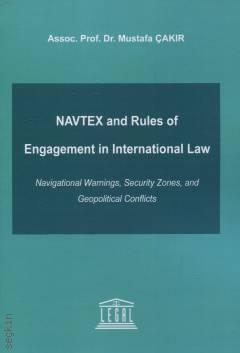
NAVTEX and Rules of Engagement in International Law
Eylül 2026 / 1. Baskı / 149 Syf.
Fiyatı: 1300.00 TL
Temin süresi 2-3 gündür.
 
Sepete Ekle
   

Sahil devletleri her gün binlerce NAVTEX mesajı yayınlar — amacı yalnızca gemileri kayalıklardan ve tehlike bölgelerinden uzak tutmak olan uyarılardır. Bu kitap, seyir güvenliği için tasarlanmış bir sistemin, sessizce modern deniz devlet yönetiminin en açıklayıcı araçlarından birine dönüştüğünü savunmaktadır.

Ege, Güney Çin Denizi, Senkaku Adaları, Kerç Boğazı, Hürmüz Boğazı ve Kızıldeniz'deki vaka incelemelerinden yararlanan bu çalışma, devletlerin egemenlik iddialarını öne sürmek, kararlılık sinyali vermek ve silahlı çatışmanın eşiğinde seyreden krizleri yönetmek amacıyla NAVTEX yayınlarını giderek nasıl kullandığını; seyir uyarısı ile angajman kuralları arasındaki sınırı nasıl sınadığını ortaya koymaktadır.

BMDHS (UNCLOS), teamül hukuku ve deniz savaşı hukukuna dayanan ve yazarın kendi kapsamlı uygulama deneyimiyle beslenen bu eser, hem titiz bir hukuki çerçeve hem de bu çerçevenin nerede yetersiz kaldığına dair samimi bir değerlendirme sunmaktadır — devam etmekte olan 2026 Hürmüz Boğazı krizine ilişkin kapsamlı bir analiz de dahil olmak üzere. Kitap, somut reform önerileriyle sona ermektedir.

Deniz hukuku ile deniz güvenliğinin kesişim noktasında çalışan akademisyenler, uygulayıcılar ve deniz uzmanları için güncel ve özgün bir katkı amacındadır.

Konu Başlıkları
NAVTEX as a Legal and Technical Instrument
NAVTEX, Unilateral Acts, and Rules of Engagement
Security Zones and the Limits of NAVTEX
NAVTEX and Sovereignty Claims
Eastern Mediterranean and Aegean Sea
South China Sea and East China Sea
Kerch Strait
The Persian Gulf and Strait of Hormuz
Red Sea, Gulf of Aden, and Comparative Chokepoint
Emerging Challenges and Reform
Barkod: 9786255802644
Yayın Tarihi: Eylül 2026
Baskı Sayısı:  1
Ebat: 16x24
Sayfa Sayısı: 149
Yayınevi: Legal Yayıncılık
Kapak Türü: Karton Kapaklı
Dili: İngilizce
Ekler: -


İÇİNDEKİLER
TABLE OF CONTENTS  
KİTAP HAKKINDA III  
ACKNOWLEDGEMENTS V  
PREFACE VII  
LIST OF ABBREVIATIONS IX  
INTRODUCTION 1  
PART I  
Chapter 1. NAVTEX as a Legal and Technical Instrument 7  
1.1. Historical Development of Maritime Warning Systems 7  
1.2. Origins and Evolution of NAVTEX 7  
1.3. Technical Structure and Operational Functions 8  
1.4. NAVTEX within the Global Maritime Distress and Safety System (GMDSS) 10  
1.5. Legal Nature of Maritime Navigational Warnings 11  
Chapter 2. NAVTEX, Unilateral Acts, and Rules of Engagement 13  
2.1. Concept and Definition 13  
2.2. Legal Effects of Unilateral Acts 14  
2.3. Conditions for Binding Commitments 15  
2.4. International Jurisprudence on Unilateral Declarations 15  
2.5. NAVTEX as a Form of Unilateral State Practice 16  
2.6. Concept of Rules of Engagement (ROE) 17  
2.7. ROE and the Prohibition of the Use of Force 18  
2.8. Crisis Management at Sea 19  
2.9. Interaction between NAVTEX and Rules of Engagement 20  
PART II  
Chapter 3. Security Zones and the Limits of NAVTEX 23  
3.1. Concept and Legal Basis 23  
3.2. Types of Maritime Security Zones 24  
3.2.1. Installation Safety Zones under Articles 60 and 80 24  
3.2.2. Temporary Danger Areas and Military Exercise Zones 25  
3.2.3. Broader Security and Defense Zones 26  
3.2.4. Security Zones during Armed Conflict and Occupation 27  
3.3 Relationship with Maritime Jurisdiction Zones 27  
3.3.1. The Territorial Sea 28  
3.3.2. The Exclusive Economic Zone 28  
3.3.3. The Continental Shelf 29  
3.3.4. The Structural Problem 29  
3.4. State Practice and Customary International Law 30  
Chapter 4. NAVTEX and Sovereignty Claims 33  
4.1. Navigational Warnings and Sovereignty Claims 33  
4.2. NAVTEX as a Tool of Maritime Governance 34  
4.3. NAVTEX and EEZ Claims 35  
4.4. NAVTEX and Continental Shelf Claims 36  
4.5. Legal Limits of NAVTEX Usage 38  
4.6. Abuse of Maritime Warning Systems 39  
PART III  
Chapter 5. Eastern Mediterranean and Aegean Sea 41  
5.1. Historical Background of Regional Disputes 41  
5.2. Blue Homeland (Mavi Vatan) Doctrine and Maritime Jurisdiction Areas 43  
5.3. NAVTEX Crises between Greece and Türkiye 45  
5.4. Legal Assessment 47  
Chapter 6. South China Sea and East China Sea 49  
6.1. Historical Background 49  
6.2. China’s Maritime Claims, the Nine–Dash Line, and the 2016 Arbitral Award 50  
6.2.1. The Tribunal’s Findings 50  
6.2.2. China’s Response and the Compliance Gap 51  
6.3. The East China Sea: Senkaku/Diaoyu Islands and Coast Guard Practice 52  
6.3.1. Historical and Legal Background 52  
6.3.2. Coast Guard Practice and the 2021 Coast Guard Law 53  
6.3.3. The Absence of a Documented NAVTEX Dimension 55  
6.4. Legal Assessment 56  
Chapter 7. Kerch Strait 59  
7.1. Historical and Legal Background 59  
7.2. The 2003 Bilateral Regime and Its Contestation 60  
7.3. Restrictions on Navigation 62  
7.4. Military Operations and Maritime Warnings since 2022 63  
7.5. NAVTEX Practice after 2014 and 2022 65  
7.6. Legal Assessment 67  
PART IV  
Chapter 8. The Persian Gulf and Strait of Hormuz 69  
8.1. Strategic Importance of Hormuz 69  
8.2. Iranian Maritime Claims 70  
8.3. Navigational Warnings and Security Alerts during the 2026 Closure 71  
8.4. Mine Warfare Risks 73  
8.5. Naval Interceptions and Blockade Issues 74  
8.6. International Responses 75  
8.7. Legal Assessment 76  
Chapter 9. Red Sea, Gulf of Aden, and Comparative Chokepoint Practice 79  
9.1. Strategic Importance and the Houthi Campaign 79  
9.2. Piracy and Maritime Security 81  
9.3. Houthi Attacks and Maritime Warnings 82  
9.4. Military Operations and Navigational Safety 83  
9.5. NAVTEX and Commercial Shipping 85  
9.6. Comparative Practice: The Gulf of Guinea and the Strait of Malacca 86  
9.7. Legal Assessment 88  
PART V  
Chapter 10. Emerging Challenges and Reform 91  
10.1. Autonomous Maritime Systems 91  
10.2. Cyber Threats to Maritime Communications 92  
10.3. Hybrid Warfare at Sea 93  
10.4. Maritime Infrastructure Protection 94  
10.5. Reforming Maritime Warning Systems: Gaps, Misuse, and the Case for Regulatory Modernization 95  
10.6. Climate Change and New Maritime Routes 97  
CONCLUSION 99  
NAVTEX as a Legal Instrument 99  
NAVTEX as a Strategic Instrument 100  
NAVTEX, Rules of Engagement, and Crisis Management at Sea 101  
NAVTEX and the Future of Maritime Security 102  
Final Reflections 103  
APPENDIX A 105  
Event 1. Turkish petroleum exploration licences in the disputed Aegean shelf (1973) 105  
Event 2. The Sismik I (Hora) seismic survey crisis (August 1976) 105  
Event 3. The Scarborough Shoal standoff (12 April 2012) 106  
Event 4. Japan’s acquisition of the Senkaku Islands (2012) 106  
Event 5. Russian occupation and annexation of Crimea (February–March 2014) 107  
Event 6. First China Coast Guard entry under the new Coast Guard Law (6 February 2021) 107  
Event 7. Closure of the Kerch Strait approaches (April 2021) 108  
Event 8. Russian invasion of Ukraine and Sea of Azov navigation suspension (24–25 February 2022) 108  
Event 9. Sinking of the Helt (3 March 2022) 109  
Event 10. Russian Novorossiysk mine–warning NAVTEX broadcast (18–19 March 2022) 109  
Event 11. Seizure of the Galaxy Leader (19 November 2023) 110  
Event 12. Twelve–state joint condemnation statement (3 January 2024) 110  
Event 13. UN Security Council Resolution 2722 (10 January 2024) 111  
Event 14. Operation Poseidon Archer strikes begin (11 January 2024) 111  
Event 15. Establishment of Operation Aspides (February 2024) 112  
Event 16. South China Sea Arbitration Award issued (12 July 2016) 112  
Event 17. Kerch Strait naval incident (25 November 2018) 113  
Event 18. The Oruç Reis/Kastellorizo crisis (July–August 2020) 113  
Event 19. Erdoğan’s Athens visit and “friendship declaration” (December 2023) 114  
Event 20. The Eternity C attack (9 July 2025) 114  
Event 21. Red Sea attack pause begins (11 November 2025) 115  
Event 22. US/Israeli strikes on Iran begin; 2026 Iran War commences (28 February 2026) 115  
Event 23. IRGC closure and mining of the Strait of Hormuz (February–March 2026) 116  
Event 24. Houthi resumption of Red Sea attacks (30 March 2026) 116  
Event 25. US naval blockade of Iranian ports (13 April–29 May 2026) 117  
Event 26. Initial Hormuz ceasefire (8 April 2026) 117  
Event 27. Indefinite–duration Turkish NAVTEX (23–30 January 2026) 118  
Event 28. Islamabad Memorandum of Understanding signed (14 June 2026) 118  
APPENDIX B 119  
REFERENCES 125  
Treaties, Conventions, and International Instruments 125  
Domestic Legislation 126  
Cases and Arbitral Awards 126  
IMO and Institutional Documents 127  
Secondary Sources: Books and Articles 127  
Secondary Sources: Institutional, News, and Online Reports 128  


Berkant Akkuş
Ekim 2026
1050.00 TL
Sepete Ekle
İslam Safa Kaya
Ekim 2026
620.00 TL
İndirimli: 576.60 TL (%7)
Sepete Ekle
Hüseyin Dengiz
Eylül 2026
500.00 TL
Sepete Ekle
Berna Akçalı Gür ...
Eylül 2026
1700.00 TL
Sepete Ekle


İÇİNDEKİLER
TABLE OF CONTENTS  
KİTAP HAKKINDA III  
ACKNOWLEDGEMENTS V  
PREFACE VII  
LIST OF ABBREVIATIONS IX  
INTRODUCTION 1  
PART I  
Chapter 1. NAVTEX as a Legal and Technical Instrument 7  
1.1. Historical Development of Maritime Warning Systems 7  
1.2. Origins and Evolution of NAVTEX 7  
1.3. Technical Structure and Operational Functions 8  
1.4. NAVTEX within the Global Maritime Distress and Safety System (GMDSS) 10  
1.5. Legal Nature of Maritime Navigational Warnings 11  
Chapter 2. NAVTEX, Unilateral Acts, and Rules of Engagement 13  
2.1. Concept and Definition 13  
2.2. Legal Effects of Unilateral Acts 14  
2.3. Conditions for Binding Commitments 15  
2.4. International Jurisprudence on Unilateral Declarations 15  
2.5. NAVTEX as a Form of Unilateral State Practice 16  
2.6. Concept of Rules of Engagement (ROE) 17  
2.7. ROE and the Prohibition of the Use of Force 18  
2.8. Crisis Management at Sea 19  
2.9. Interaction between NAVTEX and Rules of Engagement 20  
PART II  
Chapter 3. Security Zones and the Limits of NAVTEX 23  
3.1. Concept and Legal Basis 23  
3.2. Types of Maritime Security Zones 24  
3.2.1. Installation Safety Zones under Articles 60 and 80 24  
3.2.2. Temporary Danger Areas and Military Exercise Zones 25  
3.2.3. Broader Security and Defense Zones 26  
3.2.4. Security Zones during Armed Conflict and Occupation 27  
3.3 Relationship with Maritime Jurisdiction Zones 27  
3.3.1. The Territorial Sea 28  
3.3.2. The Exclusive Economic Zone 28  
3.3.3. The Continental Shelf 29  
3.3.4. The Structural Problem 29  
3.4. State Practice and Customary International Law 30  
Chapter 4. NAVTEX and Sovereignty Claims 33  
4.1. Navigational Warnings and Sovereignty Claims 33  
4.2. NAVTEX as a Tool of Maritime Governance 34  
4.3. NAVTEX and EEZ Claims 35  
4.4. NAVTEX and Continental Shelf Claims 36  
4.5. Legal Limits of NAVTEX Usage 38  
4.6. Abuse of Maritime Warning Systems 39  
PART III  
Chapter 5. Eastern Mediterranean and Aegean Sea 41  
5.1. Historical Background of Regional Disputes 41  
5.2. Blue Homeland (Mavi Vatan) Doctrine and Maritime Jurisdiction Areas 43  
5.3. NAVTEX Crises between Greece and Türkiye 45  
5.4. Legal Assessment 47  
Chapter 6. South China Sea and East China Sea 49  
6.1. Historical Background 49  
6.2. China’s Maritime Claims, the Nine–Dash Line, and the 2016 Arbitral Award 50  
6.2.1. The Tribunal’s Findings 50  
6.2.2. China’s Response and the Compliance Gap 51  
6.3. The East China Sea: Senkaku/Diaoyu Islands and Coast Guard Practice 52  
6.3.1. Historical and Legal Background 52  
6.3.2. Coast Guard Practice and the 2021 Coast Guard Law 53  
6.3.3. The Absence of a Documented NAVTEX Dimension 55  
6.4. Legal Assessment 56  
Chapter 7. Kerch Strait 59  
7.1. Historical and Legal Background 59  
7.2. The 2003 Bilateral Regime and Its Contestation 60  
7.3. Restrictions on Navigation 62  
7.4. Military Operations and Maritime Warnings since 2022 63  
7.5. NAVTEX Practice after 2014 and 2022 65  
7.6. Legal Assessment 67  
PART IV  
Chapter 8. The Persian Gulf and Strait of Hormuz 69  
8.1. Strategic Importance of Hormuz 69  
8.2. Iranian Maritime Claims 70  
8.3. Navigational Warnings and Security Alerts during the 2026 Closure 71  
8.4. Mine Warfare Risks 73  
8.5. Naval Interceptions and Blockade Issues 74  
8.6. International Responses 75  
8.7. Legal Assessment 76  
Chapter 9. Red Sea, Gulf of Aden, and Comparative Chokepoint Practice 79  
9.1. Strategic Importance and the Houthi Campaign 79  
9.2. Piracy and Maritime Security 81  
9.3. Houthi Attacks and Maritime Warnings 82  
9.4. Military Operations and Navigational Safety 83  
9.5. NAVTEX and Commercial Shipping 85  
9.6. Comparative Practice: The Gulf of Guinea and the Strait of Malacca 86  
9.7. Legal Assessment 88  
PART V  
Chapter 10. Emerging Challenges and Reform 91  
10.1. Autonomous Maritime Systems 91  
10.2. Cyber Threats to Maritime Communications 92  
10.3. Hybrid Warfare at Sea 93  
10.4. Maritime Infrastructure Protection 94  
10.5. Reforming Maritime Warning Systems: Gaps, Misuse, and the Case for Regulatory Modernization 95  
10.6. Climate Change and New Maritime Routes 97  
CONCLUSION 99  
NAVTEX as a Legal Instrument 99  
NAVTEX as a Strategic Instrument 100  
NAVTEX, Rules of Engagement, and Crisis Management at Sea 101  
NAVTEX and the Future of Maritime Security 102  
Final Reflections 103  
APPENDIX A 105  
Event 1. Turkish petroleum exploration licences in the disputed Aegean shelf (1973) 105  
Event 2. The Sismik I (Hora) seismic survey crisis (August 1976) 105  
Event 3. The Scarborough Shoal standoff (12 April 2012) 106  
Event 4. Japan’s acquisition of the Senkaku Islands (2012) 106  
Event 5. Russian occupation and annexation of Crimea (February–March 2014) 107  
Event 6. First China Coast Guard entry under the new Coast Guard Law (6 February 2021) 107  
Event 7. Closure of the Kerch Strait approaches (April 2021) 108  
Event 8. Russian invasion of Ukraine and Sea of Azov navigation suspension (24–25 February 2022) 108  
Event 9. Sinking of the Helt (3 March 2022) 109  
Event 10. Russian Novorossiysk mine–warning NAVTEX broadcast (18–19 March 2022) 109  
Event 11. Seizure of the Galaxy Leader (19 November 2023) 110  
Event 12. Twelve–state joint condemnation statement (3 January 2024) 110  
Event 13. UN Security Council Resolution 2722 (10 January 2024) 111  
Event 14. Operation Poseidon Archer strikes begin (11 January 2024) 111  
Event 15. Establishment of Operation Aspides (February 2024) 112  
Event 16. South China Sea Arbitration Award issued (12 July 2016) 112  
Event 17. Kerch Strait naval incident (25 November 2018) 113  
Event 18. The Oruç Reis/Kastellorizo crisis (July–August 2020) 113  
Event 19. Erdoğan’s Athens visit and “friendship declaration” (December 2023) 114  
Event 20. The Eternity C attack (9 July 2025) 114  
Event 21. Red Sea attack pause begins (11 November 2025) 115  
Event 22. US/Israeli strikes on Iran begin; 2026 Iran War commences (28 February 2026) 115  
Event 23. IRGC closure and mining of the Strait of Hormuz (February–March 2026) 116  
Event 24. Houthi resumption of Red Sea attacks (30 March 2026) 116  
Event 25. US naval blockade of Iranian ports (13 April–29 May 2026) 117  
Event 26. Initial Hormuz ceasefire (8 April 2026) 117  
Event 27. Indefinite–duration Turkish NAVTEX (23–30 January 2026) 118  
Event 28. Islamabad Memorandum of Understanding signed (14 June 2026) 118  
APPENDIX B 119  
REFERENCES 125  
Treaties, Conventions, and International Instruments 125  
Domestic Legislation 126  
Cases and Arbitral Awards 126  
IMO and Institutional Documents 127  
Secondary Sources: Books and Articles 127  
Secondary Sources: Institutional, News, and Online Reports 128  


Kitap
Bülten
Kitap
Kitap
İndirimli Kitaplar
 
 
Ana Sayfa | 2021 Kaynakça Dokümanı | Hakkımızda | Bülten | Kişisel Verilerin Korunması | Yardım | İletişim

Seçkin Yayıncılık San. Tic. A.Ş.
Copyright © 1996 - 2026